Ryan Powers
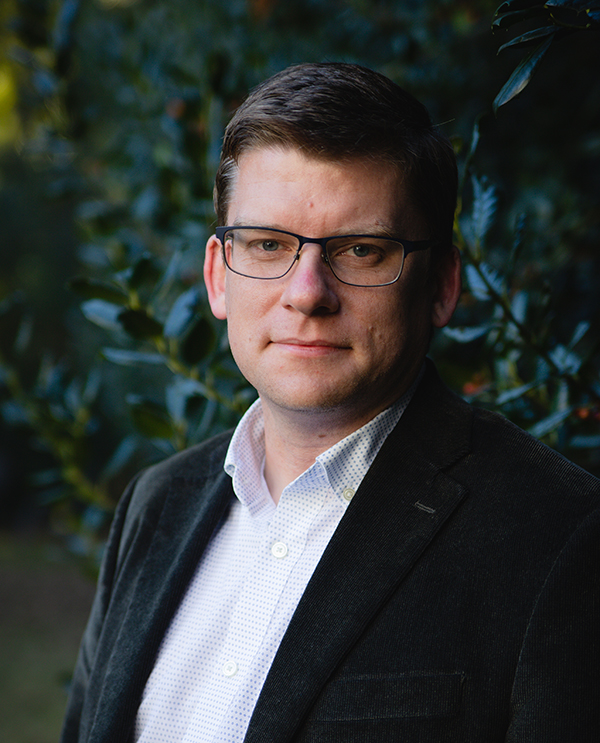
I am an Associate Professor of International Affairs at the University of Georgia's School of Public and International Affairs. In addition, I am the Gary K. Bertsch Director of the Benson-Bertsch Center for International Trade and Security, the hub for research, teaching, and outreach on national and international security at the University of Georgia.
I am also a Non-Resident Fellow with the Futures Lab in the Defense & Security Department at the Center for Strategic and International Studies and a Co-Director of the Teaching, Research, and International Policy (TRIP) Project at William & Mary's Global Research Institute.
I study the domestic and international politics of conflict and cooperation. My current research examines how actors draw reputational inferences about one another in international relations and how technology shapes foreign policy decision-making.
At the Benson-Bertsch Center, I lead an interdisciplinary team of researchers and students studying the national and international security implications of energy, trade, and technology policy.
Before moving to Georgia, I completed a postdoctoral fellowship at Yale University. I hold a Ph.D. in Political Science from the University of Wisconsin-Madison and a B.A. in Government from William & Mary.
Research
I study the domestic and international politics of conflict and cooperation. My current research examines how actors draw reputational inferences about one another in international relations and how technology shapes foreign policy decision-making. My research has been supported by the National Science Foundation, Carnegie Corporation of New York, the Stanton Foundation, and the Institute for Humane Studies.
At the Benson-Bertsch Center for International Trade and Security, I lead an interdisciplinary team of researchers studying the national security implications of energy, trade, and technology policy. Our work is regularly supported by major gifts from private individuals and industry partners as well as government contracts.
Current Projects
- Hawks, Doves, and the Domestic Politics of Arms Control (with Rachel Whitlark)
- Reputational Elasticities in World Politics (with Jonathan Renshon)
- AI and Foreign Policy Decision-Making (with Ben Jensen, Yasir Atalan, and Ian Reynolds)
- Silicon Samples: Using LLMs to Simulate Survey Participants (with Jason Anastasopoulos and Akshat Lakhiwal; funded by an Institute for AI Seed Grant)
Working Papers
Scholarship on reputations in IR has left out a striking feature of human psychology: identity. Categorizing others as “us” or “them” is automatic, pervasive and has significant implications for reputations. We provide a framework—based on social identity theory—to explain how ingroup bias affects how reputations are generated and maintained. Empirically, we provide two contributions. First, we field descriptive surveys on public elite samples to learn about the markers of international ingroups and aid in our experimental design. Second, we pilot and field a pre-registered experiment that tests implications of our identity-based theory of reputations, finding that ingroup membership improves (1) reputations of all types (signaling, financial, humanitarian and resolve) and (2) observers’ willingness to cooperate but (3) does not moderate the impact of past resolved behavior on reputations for standing firm in the security domain. We use several pre-registered follow-up studies to refine theoretical scope conditions and explore treatment generalizability.
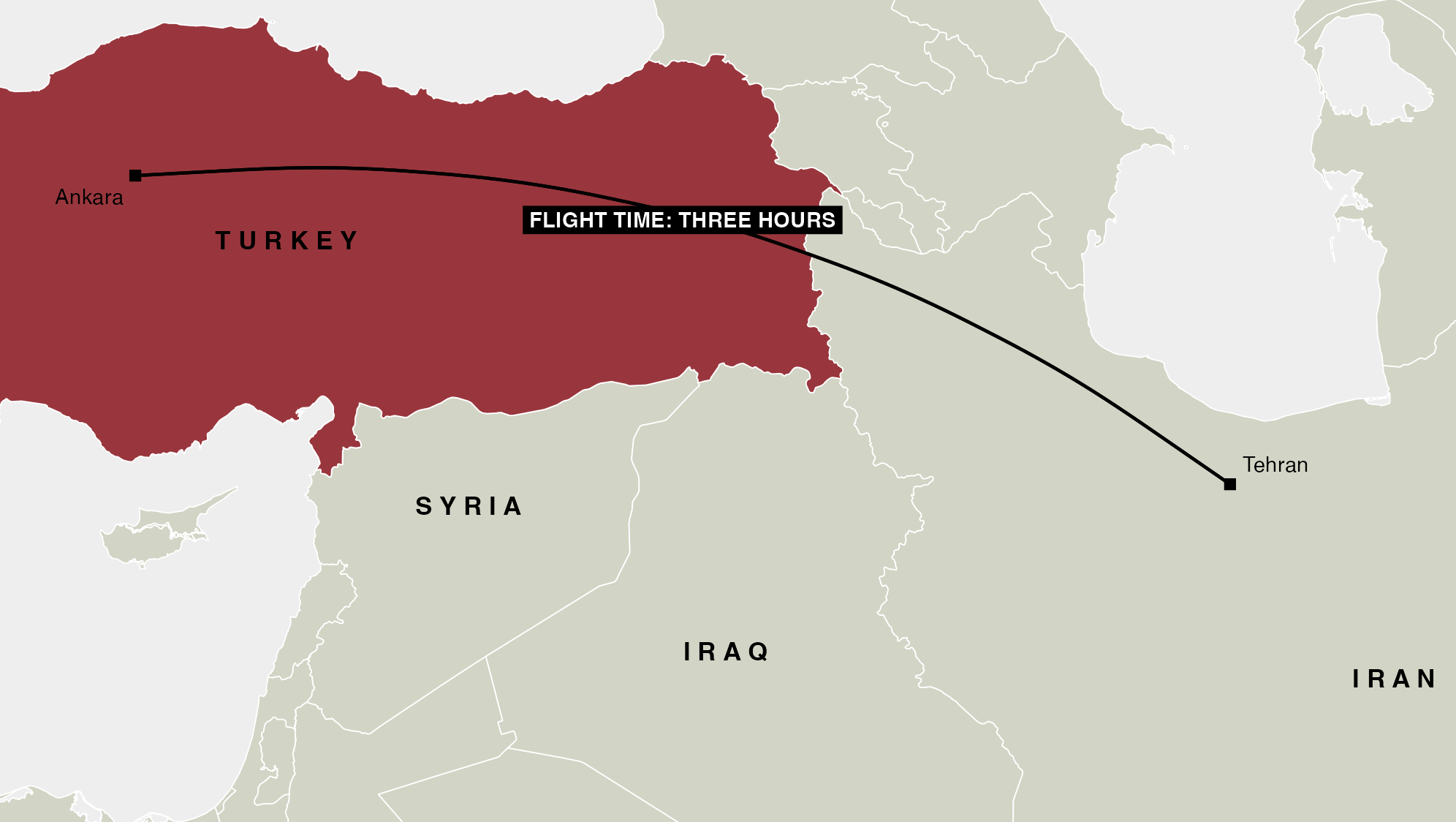
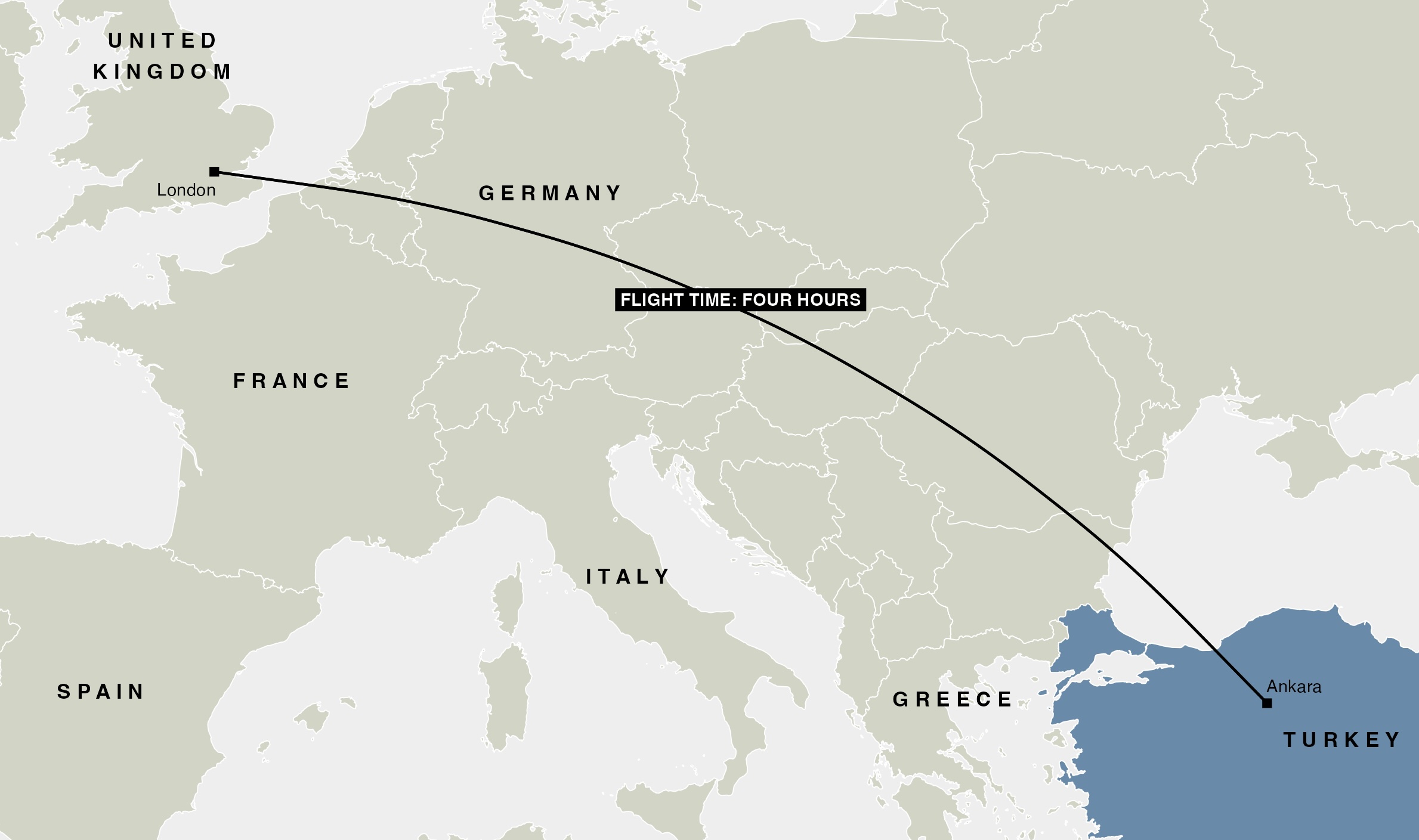
We manipulate identity, in part, by emphasizing the distance between Turkey and an ally (or adversary) of the respondent’s country.
Recent years have been marked by a surge in defections from cooperative arrangements, as states increasingly abrogate or violate international commitments. Yet existing theories of international cooperation do not adequately explain the incentives and motivations of states as they formulate responses to such behavior. We argue that reputational dynamics are central to understanding how states respond to defection, and that reputation operates through two distinct channels. First, violations damage the offending state’s reputation for upholding commitments, reducing victims’ and observers’ appetite for future cooperation. Second, states that fail to punish violations risk damaging their own reputation for toughness, creating incentives to confront rather than tolerate defection. Two pre-registered survey experiments test these mechanisms. A conjoint experiment on the American public shows that a partner’s past violations have a larger effect on support for cooperation than any other feature of a prospective agreement, including the gains at stake, ease of monitoring, and regime type. Leadership turnover in the offending state partially—but not fully—offsets this reputational damage. A vignette experiment on UK respondents demonstrates that tolerating violations generates significant reputational and material costs, including among observers not directly harmed, and that these costs persist even when the violator is much more powerful. Together, these results suggest noncompliance creates dual reputational pressures that simultaneously raise the cost of future cooperation for violators and discourages accommodation as a viable response.
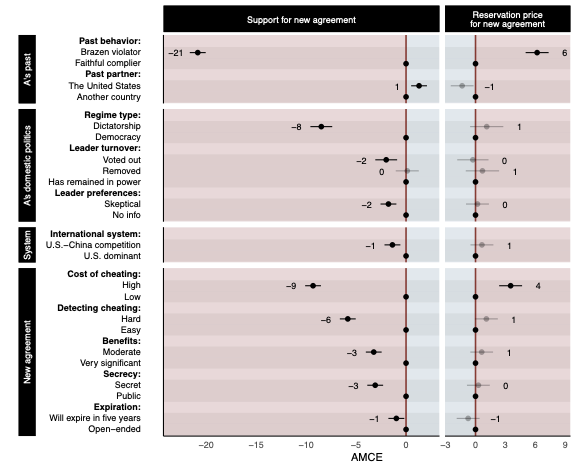
A conjoint experiment studying how situational variation shapes support for cooperation.
Are attacks by foreign actors against a country’s space-based assets received differently than similar attacks against assets on the ground? We study this question using a survey experiment fielded on the American public. We present respondents with a scenario in which China attacks U.S. government communication systems. We vary the following elements: the domain of the attack (space vs. ground), method of attack (cyber vs. kinetic), and potential fatalities. After manipulation, we ask respondents to indicate their level of support for retaliatory measures ranging from breaking diplomatic relations to the use of military force. The results suggest the public does not view space-based conflict differently than conflict on the ground. However, individuals are more likely to support harsher retaliatory measures in response to kinetic attacks and attacks that produce fatalities.
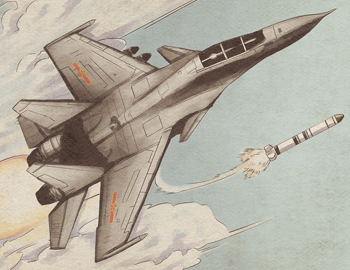
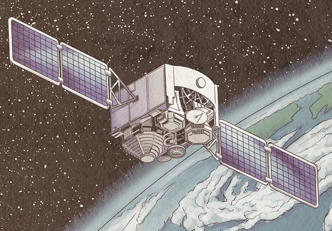
Illustrations used as part of our experimental manipulations.
Peer-Reviewed Articles
- “International Relations Scholars, the Media, and the Dilemma of Consensus” (with Irene Entringer, Shauna Gillooly, Susan Peterson, and Mike Tierney). Published online ahead of print in Perspectives on Politics.
- “Can Rising Powers Reassure? Shifting Power, Foreign Economic Policy, and Perceptions of Revisionist Intent” (with Austin Strange). Published online ahead of print in Journal of Peace Research.
- “Is Context Pretext? Institutionalized Commitments and the Situational Politics of Foreign Economic Policy.” Published online ahead of print in Review of International Organizations.
- “Judicialization and Public Support for Compliance with International Commitments.” 2024. International Studies Quarterly, 68(3): sqae078 (with Harlan Cohen).
- “Great Expectations: The Democratic Advantage in Trade Attitudes.” 2023. World Politics, 75(2): 316–352 (with Jon Pevehouse and Freddy Chen).
- “International Status Concerns and Domestic Support for Political Leaders.” 2023. American Journal of Political Science, 67(3): 732–747 (with Jonathan Renshon).
- “Trade Politics at the Checkout Lane: Ethnocentrism and Consumer Preferences.” 2023. Political Science Research and Methods, 11(3): 605–612 (with Alexa Bankert and Geoff Sheagley).
- “The Cult of the Relevant: International Relations Scholars and Policy Engagement Beyond the Ivory Tower.” 2023. Perspectives on Politics, 21(4): 1270–1282 (with Cullen Hendrix, Julia Macdonald, Susan Peterson, and Michael Tierney).
- “Can Increasing Awareness of Gender Gaps in International Relations Help Close Them? Evidence from a Scholar Ranking Experiment.” 2023. International Studies Perspectives, 24(4): 420–440 (with Emily Jackson, Daniel Maliniak, Eric Parajon, Susan Peterson, and Michael Tierney).
- “The Myth of the Eclectic IR Scholar?” 2023. International Studies Perspectives, 24(3): 308–335 (with Helen Milner and Erik Voeten).
- “Does Social Science Inform Foreign Policy? Evidence from a Survey of U.S. National Security, Trade, and Development Officials.” 2022. International Studies Quarterly, 66(1) (with Paul Avey, Michael Desch, Eric Parajon, Susan Peterson, and Michael Tierney).
- “Epistemic Communities and Public Support for the Paris Agreement on Climate Change.” 2021. Political Research Quarterly, 74(4): 866–881 (with Dan Maliniak and Eric Parajon).
- “Is International Relations a Global Discipline? Hegemony, Insularity, and Diversity in the Field.” 2018. Security Studies, 27(3): 448–484 (with Daniel Maliniak, Susan Peterson, and Michael J. Tierney).
- “The Gender Citation Gap in International Relations.” 2013. International Organization, 67(4): 889–922 (with Daniel Maliniak and Barbara F. Walter).
- “More Dollars than Sense: Refining Our Knowledge of Development Finance Using AidData.” 2011. World Development, 39: 1891–1906 (with Michael J. Tierney, Daniel L. Nielson, Darren G. Hawkins, J. Timmons Roberts, Michael G. Findley, Bradley Parks, Sven E. Wilson, and Rob Hicks).
Edited Volume
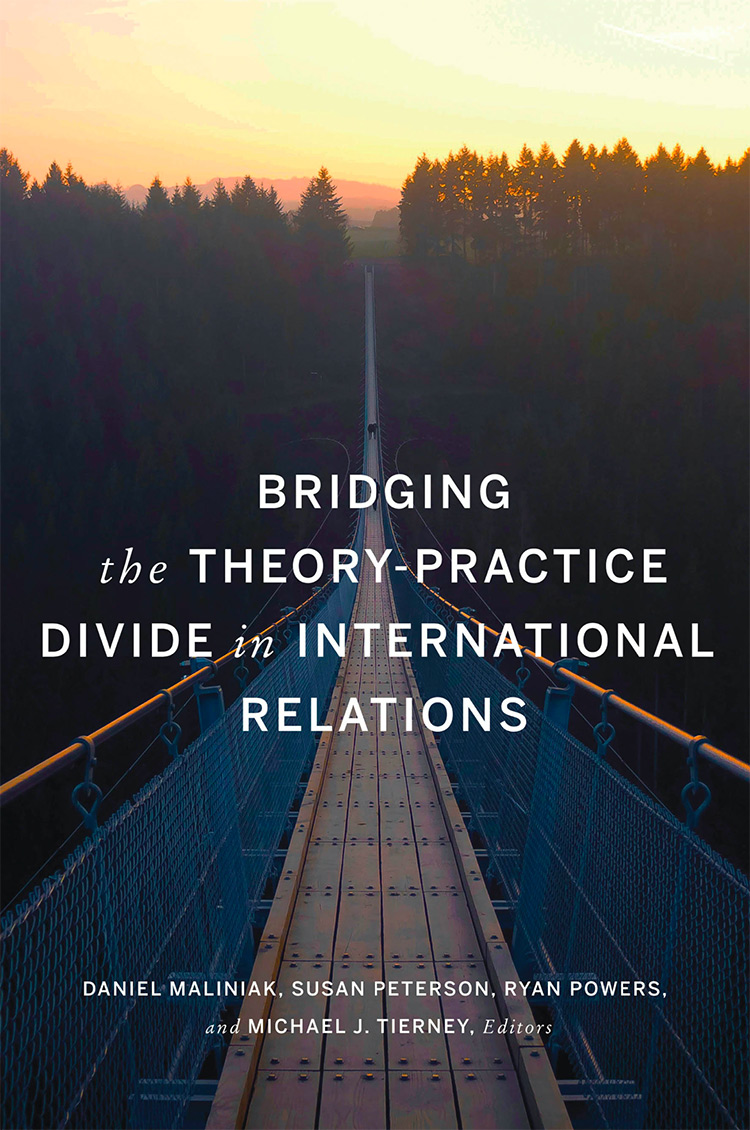
With contributions from Paul Avey, Dmitri Demekas, Mike Desch, Scott Edwards, Peter Feaver, Mike Findley, Jessica Green, Thomas Hale, John R. Harvey, Sarah Kreps, Marc Levy, Ed Mansfield, Sarah Mendelson, Amanda Murdie, Tom Pepinsky, Jon Pevehouse, Steven Radelet, Christina Schneider, David Steinberg, Jessica Weeks, Joseph Young, and Robert Zoellick.
Engagement
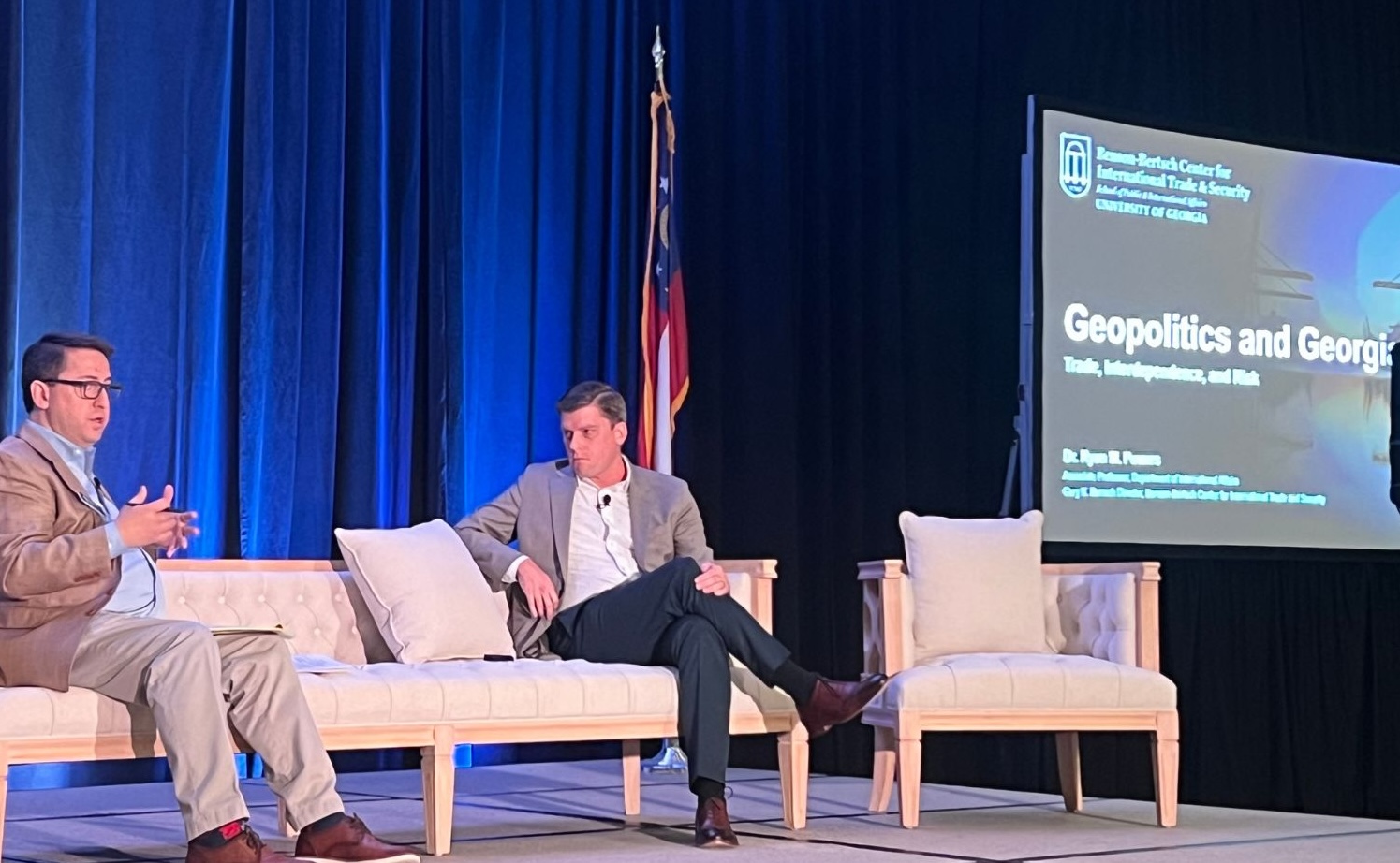

At Benson-Bertsch, I lead outreach programs that connect scholars, students, and practitioners working on national security, trade, and energy policy. We maintain a broad network of partners across industry, government, and the nonprofit sector. I also serve as Research Partner Lead for the Georgia Network for Electric Mobility (GNEM), connecting industry partners with faculty expertise at universities across Georgia.
Through the Teaching, Research, and International Policy (TRIP) project, I survey international relations scholars and communicate their views to policy makers and the public. I also work with the Futures Lab at the Center for Strategic and International Studies (CSIS) to produce and disseminate research to the U.S. foreign policy community.
.png)
TRIP Snap Polls published by Foreign Policy
- “Disapproval for Iran War Among Experts Is Sky-High,” March 2026 (with Irene Entringer García Blanes, Susan Peterson, and Michael J. Tierney).
- “IR Scholars Worry About U.S. Conflict With Iran,” June 2025 (with Susan Peterson and Michael J. Tierney).
- “IR Experts See Glaring Differences Between Harris and Trump,” October 2024 (with Irene Entringer Garcia Blanes, Susan Peterson, and Michael Tierney).
- “Poll: Will Russia Invade Ukraine?” January 2022 (with Irene Entringer Garcia Blanes, Susan Peterson, and Michael Tierney).
- “Poll: Biden Gets High Marks for Foreign Policy,” May 2021 (with Irene Entringer Garcia Blanes, Susan Peterson, and Michael Tierney).
- “Poll: How Biden and Trump Differ on Foreign Policy,” October 2020 (with Irene Entringer Garcia Blanes, Alexandra Murphy, Susan Peterson, and Michael Tierney).
- “Trump, COVID-19, and the Future of International Order,” October 2020 (with Helen Milner, Susan Peterson, Michael Tierney, and Erik Voeten).
- “Beyond IR’s Ivory Tower,” September 2020 (with Cullen Hendrix, Julia MacDonald, Michael Tierney, and Susan Peterson).
- “Snap Poll: What Foreign-Policy Experts Make of Trump’s Coronavirus Response,” May 2020 (with Eric Parajon, Susan Peterson, and Michael J. Tierney).
- “Snap Poll: What Experts Make of Trump’s Foreign Policy,” December 2018 (with Eric Parajon, Susan Peterson, and Michael J. Tierney).
- “Snap Poll: Who Will Make the Best Foreign Policy President?” February 2016 (with Daniel Maliniak, Susan Peterson, and Michael J. Tierney).
- “Snap Poll: Will China, Iran, and Russia Cooperate With the United States?” October 2015 (with Daniel Maliniak, Susan Peterson, and Michael J. Tierney).
- “Snap Poll: Is a Soccer Scandal More Scandalous If It Involves Putin?” June 2015 (with Daniel Maliniak, Susan Peterson, and Michael J. Tierney).
- “Snap Poll: Is the Iran Deal Good for Your Country’s National Security?” March 2015 (with Daniel Maliniak, Susan Peterson, and Michael J. Tierney).
- “The Best International Relations Schools in the World,” February 2015 (with Daniel Maliniak, Susan Peterson, and Michael J. Tierney).
- “Snap Poll: How Likely Is War With Russia in the Next 10 Years?” January 2015 (with Daniel Maliniak, Susan Peterson, and Michael J. Tierney).
- “Snap Poll: Does Obama Need to Put Troops in Ukraine to Prove America Is Tough?” June 2014 (with Daniel Maliniak, Susan Peterson, and Michael J. Tierney).
- “Snap Poll: The View from the Ivory Tower,” March 2014 (with Daniel Maliniak, Susan Peterson, and Michael J. Tierney).
- “Are There Neoconservative Wolves in the Realist Flock?” January 2012 (with Daniel Maliniak and Michael J. Tierney).
Policy writing in other outlets
- “There Really is an Expert Consensus: Multilateralism Still Matters,” Lawfare, January 2019 (with Eric Parajon, Susan Peterson, and Michael J. Tierney).
- “Experts Don’t Like Trump’s Withdrawal from the Iran Deal,” The Monkey Cage, May 2018.
- “A Reply to ‘Reducing Political Bias in Political Science Estimates’,” PS: Political Science & Politics (with Daniel Maliniak and Barbara Walter).
- “Do Americans think strategically when they think about trade?” The Monkey Cage, July 2015 (with Jon C. W. Pevehouse).
- “Is the Public Really Learning to Love Globalization?” The Monkey Cage, June 2014 (with Daniel Maliniak).
Teaching & Mentoring
I teach classes on international relations and research methods to undergraduate and graduate students. My teaching has been recognized with the Department of International Affairs Award for Teaching Excellence and the School of Public and International Affairs Teaching Award.
As an inaugural Creative Engagement Wing Fellow, I am developing a course on emerging technology and international relations in which students work with AI, VR, and 3D printing to learn about modern conflict and cooperation. Previously, I was a Lilly Teaching Fellow, and a Teaching Academy Fellow.
Courses
University of Georgia
- Undergraduate
- Emerging Technology and International Relations (Fall 2026)
- Experiments in International Affairs (Spring 2025)
- Introduction to International Relations (Fall 2018, Fall 2019, Spring 2021, Fall 2021, Spring 2023, Fall 2025, Spring 2026)
- International Political Economy (Spring 2019, Spring 2020, Spring 2022, Spring 2025)
- Graduate
- Research Methods for International Policy (Fall 2026)
- China and World Order (TBD)
- Experiments in International Relations (Spring 2023, Fall 2024)
- International Relations Field Seminar (Fall 2018, Fall 2019, Spring 2020, Fall 2020, Fall 2021, Fall 2022, Spring 2023, Fall 2024)
- International Political Economy (Spring 2022, Spring 2024)
Yale University
- Domestic Politics and International Relations (Spring 2018)
University of Wisconsin–Madison
- Teaching Assistant, Problems in American Foreign Policy (Summer 2016, Summer 2017)
- Teaching Assistant, Nuclear Weapons and World Politics (Spring 2017)
- Teaching Assistant, International Political Economy (Summer 2012, 2013, 2015)
Undergraduate Research Mentoring
I have taught over a dozen sections of our research-focused independent study course in which undergraduates design and execute original research projects. Students present at the Center for Undergraduate Research Opportunities Symposium, School of Public and International Affairs Undergraduate Research Colloquium, and major disciplinary conferences. I also regularly fund data collection for undergraduate research projects.
Awards and Fellowships
- Center for Teaching and Learning Creative Engagement Wing Fellow (2026)
- School of Public and International Affairs Teaching Award, University of Georgia (2024)
- Department of International Affairs Award for Teaching Excellence, University of Georgia (2022)
- Center for Teaching and Learning Lilly Teaching Fellow, University of Georgia (2020-2022)
- Teaching Academy Fellow, University of Georgia (2019)